Commercial Waste in Southgate
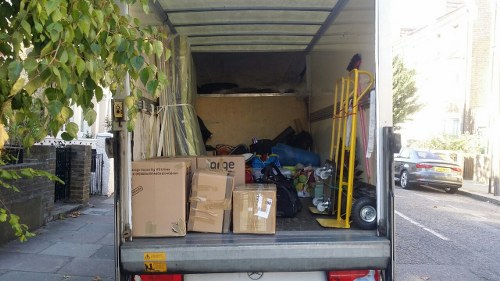
Commercial waste in Southgate needs a practical, well-organised service that helps businesses keep premises clear, compliant and ready for daily use. We provide commercial waste removal for offices, shops, hospitality venues, landlords and other workplaces that need reliable clearance of everyday rubbish and bulky unwanted items. The work can include regular collection support, one-off clearances and help with mixed loads that are awkward to sort without the right vehicle and handling.
Our service is designed around business waste that does not belong in ordinary domestic collections. That can include packaging, broken furniture, unwanted fixtures, office clutter, shelving, stock remnants and general non-hazardous waste from day-to-day trading. Where a load contains different materials, we separate and handle it sensibly so the right items can be directed towards reuse or recycling where possible.
For a clear start, it helps to have a simple description of what needs removing and when the work needs to happen. If you are comparing options, you can also look at our pricing and quotes information for a better sense of how jobs are assessed. When you are ready, ask for a quotation and we can guide you through the next step.
Business waste removal for day-to-day operations
Business waste removal is often about keeping a working environment presentable without interrupting operations. We handle loads that arise from routine office changes, stock rotation, packaging build-up, end-of-line items and general clear-outs. The aim is to remove waste promptly and sensibly so the workplace can keep functioning without piles of unwanted material taking over useful space.
Different commercial settings create different kinds of waste. An office may need help with desks, chairs, filing and mixed paper waste, while a retail site may have cardboard, display fixtures and damaged stock. Hospitality premises often produce mixed waste streams that need careful handling and enough capacity to avoid repeated disruption. In each case, the value of the service is in matching the removal to the actual load rather than treating every job the same.
Useful decisions for a business customer often come down to access, load type and timing. Lift access, rear entrances, stairways and loading bays can all affect the most practical approach, while clear information about the materials involved helps avoid delays. If your waste includes items such as confidential papers, broken electricals or mixed fixtures, we can discuss the best route for removal before work begins. If that sounds useful, please request a quotation.
Office clearance and workplace furniture
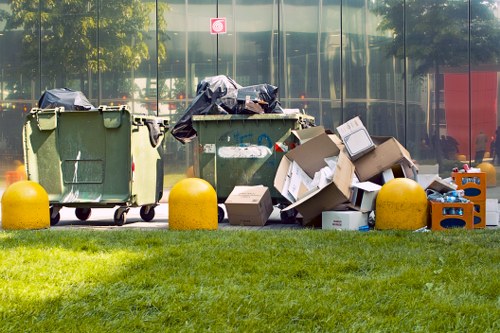
Office clearance usually involves more than taking away one or two unwanted items. Workplaces can accumulate spare desks, chairs, storage units, monitors, filing cabinets and general clutter from reorganisations, moves or refurbishments. We clear office waste in a way that keeps circulation routes open and helps prepare the premises for continued use, refurbishment or handover. Where possible, we separate reusable and recyclable materials from general waste.
If a workplace is being reconfigured, the removal of furniture often needs to follow a sensible sequence. Larger pieces may need to come out before smaller items can be stacked or sorted, and some furniture can be awkward to move through narrow internal spaces. We handle office furniture and associated waste carefully so the work can progress without unnecessary damage to floors, walls or doorways. That approach matters whether the job is a single room or a larger floor area.
For many office customers, the key question is not just what to remove, but how to remove it with the least disruption. Mixed office clearance can include old stationery, packaging, fixtures and obsolete equipment, but the exact composition is best described plainly at the enquiry stage. That gives us a clearer view of the load and the lifting involved. To move things forward, send through the details and ask for a quotation.
Furniture disposal and bulky items
Furniture disposal is a core part of commercial waste work because bulky items quickly become difficult to manage on-site. We remove unwanted office desks, meeting tables, reception seating, shelving, cabinets and other furniture that has reached the end of its useful life. The service is suitable for businesses that need a tidy solution for accumulated items rather than a temporary storage problem.
Not every item can be treated in the same way, because some furniture is mainly wood-based, some combines metal and fabric, and some includes fittings that need to be separated before onward handling. That is why a clear description matters. It helps us plan the vehicle space, labour and sorting needed for the job, especially where the items are mixed with packaging or other business rubbish. Responsible disposal starts with knowing what is there.
When planning a clearance, it is sensible to think about which furniture should go, which should stay in use and whether any items may be moved from one part of the premises to another. That can reduce unnecessary handling and make the work more efficient. If you want a straightforward next step, our team can review the load and provide a quotation based on the actual furniture and waste involved.
Waste streams and item types we handle
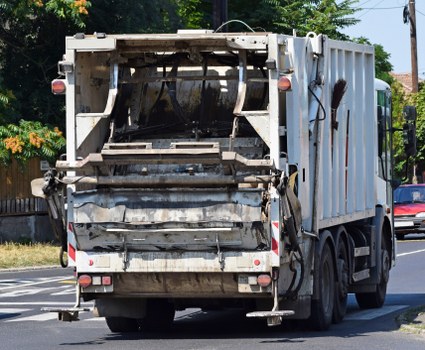
Commercial premises often generate a mixture of waste streams rather than a single neat category. To keep things practical, we work with common non-hazardous business waste such as packaging, office clutter, broken chairs, obsolete fixtures, general rubbish and items from clear-outs. We can also discuss specialist categories where the load is more defined, such as furniture disposal, appliance removal or confidential shredding in the right circumstances.
The important point is that the type of waste influences how it should be handled. Cardboard and packaging may be straightforward, but mixed loads can contain materials that need separating before disposal or recycling. A job becomes easier to manage when the customer identifies the main contents clearly, because that helps determine the safest and most efficient method of removal. If you are unsure whether a load is suitable, describe it and we can assess it from there.
Common commercial items we are often asked about include:
- office desks, chairs and storage units
- shop fixtures, display pieces and shelving
- cardboard, packaging and mixed general waste
- unwanted furniture from refurbishments
- non-hazardous items from clear-outs and relocations
Clearances for offices, shops and managed premises
Different businesses need different forms of support, and commercial waste removal should reflect that variety. Office sites may want help with internal rearrangements, while shops may need clearance after stock changes or refurbishments. Managed premises can also require regular waste removal for shared or back-of-house areas where rubbish builds up over time. Our work is aimed at practical clearance rather than broad advice, so the service can be matched to the location and the type of waste.
We also recognise that some premises create waste in stages. A landlord, facilities manager or business owner may need one visit to clear a back room, then another to remove remaining items after a move or refit. In that case, planning the work around access and available space becomes important. It is usually best to decide what can be moved immediately, what should stay, and whether any items are being kept for reuse or resale.
If the premises contain mixed waste and furniture, it is often sensible to have one quotation that reflects the whole job rather than dividing everything into separate unclear tasks. That makes it easier to compare the practical scope and to decide how much help is needed on the day. We can talk through the relevant options and, if suitable, provide a quotation for the clearance.
About Southgate
Southgate is a district in the London Borough of Enfield, in north London, with a character shaped by both suburban growth and much older settlement patterns. The area is centred on Southgate Circus and the surrounding high street, while to the south lies Southgate Green, a village-like conservation area with a quieter atmosphere and a strong sense of architectural continuity. Much of Southgate’s present form reflects the spread of the Piccadilly line in the early twentieth century, which encouraged residential development and made the district more closely connected to central London. That transport history is still visible in the layout of the area, where streets branch away from the main road network into tree-lined residential roads and local shopping parades. Southgate Underground station itself, designed by Charles Holden and opened in 1933, is one of the best-known examples of the station architecture associated with that period. The district also contains older landmarks and buildings that hint at its earlier rural and village past, including St Andrew’s Church, which sits near Southgate Green and remains an important local focal point. Green spaces add to the area’s character, with Grovelands Park offering open parkland, water, mature trees and a route through a landscape that feels different from the busier commercial stretches. Nearby, the presence of the New River and related water features reflects the wider history of north London’s water supply and landscape planning. Southgate therefore combines transport heritage, suburban streets, local retail activity and historic green spaces in a way that makes it distinct within Enfield and recognisable as a settled part of north London.
Recycling, sorting and environmentally aware handling
Responsible commercial waste removal is not just about taking material away; it is also about sorting loads in a sensible way. Where items can be separated for reuse or recycling, that reduces the amount going to general disposal and makes better use of the materials in the load. This is particularly relevant for commercial waste because business premises often generate a more varied mix of cardboard, office furniture, plastics and metal fittings.
Customers sometimes ask whether a load should be left mixed or divided up first. In practice, the answer depends on access, time and the contents themselves. If items are already stacked neatly, that can help. If not, we can still assess the waste as it stands and plan accordingly. The main aim is to avoid unnecessary handling while keeping the process orderly and transparent from the start.
For businesses that want a more considered approach, it can be helpful to flag any items with a clear reuse value or anything that should be treated separately. That may include furniture in fair condition, office equipment with mixed materials or cartons containing different waste types. A little clarity at the outset can make the whole job more efficient. If you would like that reviewed, ask for a quotation.
Planning access, timing and the practical side of removal

Commercial waste jobs run more smoothly when access and timing are considered early. If the premises have limited parking, shared entrances, security controls or narrow internal routes, these details matter. They affect how the work is carried out and how quickly the load can be removed. A clear description of the site layout is usually more useful than a long explanation, because it lets the job be planned around the real constraints.
There is also value in deciding which materials are ready to go and which are still in use. That matters during office moves, refurbishments and stock changes, when some items may be waiting to be signed off or moved elsewhere. The more carefully the clearance is staged, the less likely it is that useful items are removed by mistake. Good preparation is mainly about clarity, not complexity.
When you are ready to progress, you can provide the item list, a few notes on access and the preferred timing. We will then be able to discuss the work properly and offer a quotation that reflects the actual commercial waste involved. If you have reached this stage, please request a quotation.
Choosing the right commercial waste service
Choosing a commercial waste service usually comes down to the nature of the load and the kind of disruption you can manage. A simple clearance may only need a small team and a single visit, while a more involved job may require careful sorting, moving bulky furniture and separating different material types. The right service is the one that matches the load rather than forcing it into an unsuitable category.
For some businesses, the priority is a routine removal that keeps back-of-house spaces usable. For others, the main need is a one-off clearance after a move, refit or de-clutter. In both cases, a practical service should handle the waste efficiently and leave the premises ready for the next stage of work. If there are particular items you are unsure about, it is better to mention them early than to leave them out of the description.
We can help with commercial waste removal, office clearance, furniture disposal and related non-hazardous load types in Southgate. If you need a clear response to an upcoming job, send the details and ask for a quotation. That is usually the quickest way to get a useful answer and plan the work properly.
Further commercial waste options
Some customers need more than one type of removal during the same project. For example, a workplace may require office clearance alongside removal of bulky furniture, while a retail unit may need packaging waste cleared at the same time as redundant fixtures. Keeping related tasks together can make the process more straightforward, provided the items are described accurately and the overall load remains manageable.
Where a job involves items that need separate handling, it is useful to identify them before the visit rather than leaving them hidden among general rubbish. That applies especially to mixed commercial waste, because the way it is loaded and sorted affects the work on the day. If your premises include furniture, packaging, general refuse and other business items, we can look at the whole job as one practical clearance.
Our aim is to keep the service clear, reliable and suited to the business environment. Commercial waste removal in Southgate should make the premises easier to use without creating extra administrative work for you. If you want to take the next step, ask for a quotation and we can discuss the load, access and timing in more detail.