Commercial Waste Southgate: Recycling and Sustainability
Commercial Waste Southgate commits to creating an eco-friendly waste disposal area across Southgate and neighbouring high streets. Our approach combines practical on-site separation with partnership networks to divert waste from landfill and turn it into resources. This page outlines how our Southgate commercial waste services support a sustainable rubbish area, the targets we track, and the local infrastructure we rely on to deliver low-carbon, responsible disposal.
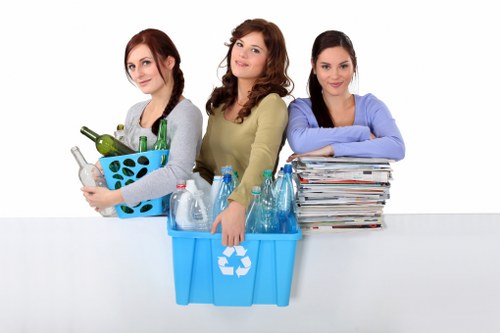 Our sustainability ambition is simple: to help businesses in Southgate achieve high recovery rates and meet borough goals. We have set a clear recycling percentage target of 70% by 2030 for the commercial waste streams we manage, with interim milestones of 55% by 2026 and 65% by 2028. Achieving this relies on source separation, reuse partnerships and continued investment in low-emission logistics.
Local transfer stations and processing hubs are central to our model. We use nearby facilities — including Edmonton EcoPark and other North London transfer stations — to route separated materials quickly to reprocessing plants. The borough approach to waste separation, particularly in Enfield and adjacent boroughs, encourages dry mixed recycling, glass, food/organics and separate construction streams; we align collection in Southgate to match these systems so materials remain high quality and recyclable.
Partnerships that power reuse
We actively partner with charities and social enterprises to recover items that still have life. Partnerships include furniture and textiles charities, local food banks for surplus catering waste, and organisations that handle E-waste and appliances. These collaboration channels reduce landfill and create social value — donating usable furniture and equipment to community projects keeps items circulating locally and reduces carbon associated with new purchases.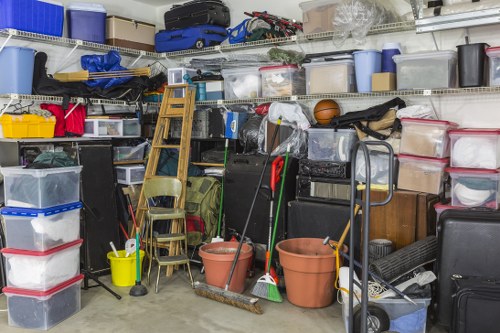
Low-carbon fleet and logistics
Our low-carbon vans and efficient routing are a core part of making commercial waste in Southgate truly sustainable. The fleet includes battery-electric vans and Euro 6 hybrids for longer routes, supported by route-optimisation software to reduce mileage and idling. We monitor vehicle emissions, switching vehicles to zero-tailpipe alternatives as charging infrastructure permits. This helps lower embodied emissions in waste transport and supports a greener eco-friendly waste disposal area.Types of recycling activity we manage
We run a comprehensive programme for the sustainable rubbish area in Southgate, handling materials commonly generated by local businesses. Key activity areas include:- Paper and cardboard — baling and onward recycling
- Mixed dry recycling — containers, cans, cartons and plastics sorted to reprocessors
- Glass — separate collection to preserve quality
- Food and organic waste — collection for anaerobic digestion and composting
- WEEE (electrical) — secure collection and certified recycling or refurbishment
- Construction & demolition materials — segregated concrete, timber and metals for recovery
- Textiles and furniture — reuse through charity partners
These activities reflect local priorities and borough-level separation schemes; coordinating with council guidance ensures businesses in Southgate contribute to borough recycling targets while simplifying compliance.
We measure progress through transparent Key Performance Indicators. Each client receives regular reporting on diversion rates, tonnages by material type, and greenhouse gas savings from reuse and recycling. Our internal scorecard compares performance against the 70% recycling percentage target and prioritises actions where contamination or mixed loads risk material loss.
How we create a sustainable rubbish area for businesses
A sustainable rubbish area starts with practical segregation on site. We advise on container layouts, provide secure stream separation for sensitive streams, and implement practical signage consistent with local council guidance. Training and routine audits reduce contamination: a cleaner stream translates to higher recycling yields and lower processing emissions.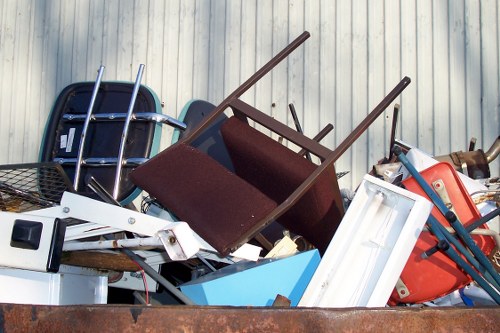
Working with community organisations strengthens the circular economy. Our charity partners include furniture reuse groups, local food redistribution networks and electronic refurbishment charities. These partners receive recovered goods that are in good condition, supporting local people and preventing valuable materials from being treated as waste. By building these charity links, Commercial Waste Southgate helps create real-world reuse pathways for business waste.